
Go Back
Components of the Directorate of Counselling Services and Career Development in NOUN
Components of the Directorate of Counselling Services
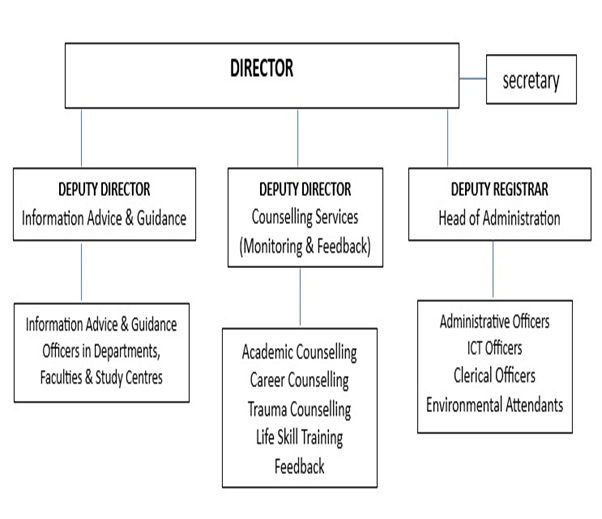
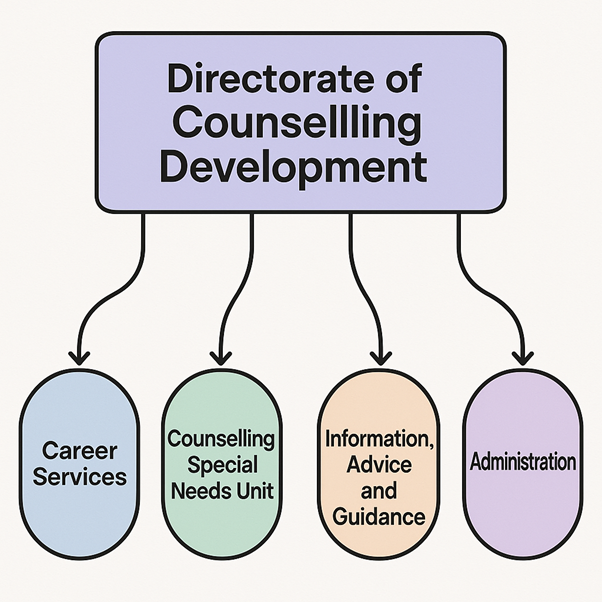
The Directorate of Counselling Services and Career Development is one of the non-academic Directorates in the National Open University of Nigeria. The Directorate is made up of seven Departments, namely:
- Office of the Director
- Student Counsellors Unit
- Learners with Special Needs Unit
- General Administration Unit.
ORGANOGRAM
Introduction to Careers: Navigating the Evolving World of Work
What Does “Career” Really Mean?
A career is not just a job — it’s a dynamic journey that includes your education, work experiences, life lessons, and personal growth over time. In today’s world, careers are flexible, evolving, and deeply personal. Planning your career begins with understanding the past, engaging with the present, and preparing for the future.
The Past: A Job for Life
Traditionally, a career meant long-term stability. People often secured a single job or remained in one organization for decades, progressing through a clearly defined structure. Job security was high, and career progression was predictable.
The Present: Career as a Lifelong Journey
Today, the world of work is fast-paced and constantly evolving. Rapid technological advancement, shifting economic landscapes, and changing societal needs have transformed the career landscape. A career is now a continuous process of learning, adaptation, and reinvention.
Modern careers may involve:
- Lateral and upward moves within or across organizations
- Combining different forms of work, such as freelancing and formal employment
- Embracing lifelong learning to remain relevant and employable
You are now the manager of your own career. This means regularly reflecting on where you are, where you want to be, and how you’ll get there.
The Future: Embracing Change and Uncertainty
Change is the new constant. As industries evolve and new professions emerge, individuals must take responsibility for their own career direction and stability. Understanding trends in the job market and anticipating future shifts are key to staying ahead.
To thrive, you need to:
- Be proactive in updating your skills
- Stay informed about labour market changes
- Build resilience and adaptability
- Think of yourself as a “company of one” in a competitive and global job market
Understanding the World of Work: Information Over Assumption
When making career decisions, base your choices on reliable, updated information — not on assumptions passed down by family, media, or society. Misconceptions can limit your options and prevent you from exploring exciting opportunities.
Test Your Assumptions: Career Myths vs. Realities
Take a moment to reflect. Are you making decisions based on outdated beliefs?
Here are common statements — can you tell which are myths and which are realities?
|
Statement |
Myth or Reality? |
Explanation |
|
The earlier a person chooses a career, the better. |
Myth |
People are likely to change careers multiple times. The key is flexibility and lifelong growth. |
|
There are other ways to explore a career besides working in it. |
Reality |
Job shadowing, research, volunteering, and informational interviews offer valuable insights. |
|
A test can tell me exactly what career to pursue. |
Myth |
Assessments help you reflect on your interests, but you make the ultimate decision. |
|
People will work in several different occupations over their lifetime. |
Reality |
Most adults will hold 5–7 occupations during their lifetime, often simultaneously. |
|
The job market should determine my career. |
Myth |
Choose a career based on your passions, strengths, and values — not just trends. |
|
Most people find jobs through networking. |
Reality |
About 80% of job opportunities come through personal connections and word of mouth. |
|
Changing careers means something is wrong. |
Myth |
Career shifts are normal and often necessary for growth, fulfilment, or better alignment. |
|
Job security no longer exists. |
Reality |
The traditional promise of long-term job security has faded — adaptability is now essential. |
The Big Picture: Trends Transforming the Workplace
The modern workplace is shaped by a range of global trends:
- Evolving relationships between employers and workers
- The rise of contract and gig work
- Globalization and increased competition
- Technological disruption across industries
- Emerging new career fields
- Ageing populations and changing workforce demographics
In contexts like South Africa and many parts of Africa, additional challenges such as youth unemployment, unequal access to education, and income inequality add to the complexity.
The result? More responsibility rests on you to shape your own career path, stay marketable, and respond to change.
Today’s World of Work: What to Expect
You can expect:
- To work in 6–10 different jobs throughout your life
- To take charge of your career planning and decisions
- Less certainty and permanence in job roles
- The need to continuously learn and upskill
- A focus on transferable and “portable” skills
- To experience gaps in employment or temporary contracts
- To aim for roles that may not even exist yet
- To build resilience and adaptability as lifelong assets
Track Your Career Progress: Own Your Journey
Making career decisions is not a one-time task — it’s a lifelong process. You’ll need to reflect often, gather insights, and stay open to learning and change. To stay organized, we recommend creating a Career Development File — a space to record your goals, insights, achievements, reflections, and action plans.
Your file might include:
- Notes from career workshops or counselling sessions
- Skills assessments and reflections
- Job research and industry profiles
- Action plans and short- or long-term goals
- Lessons learned from experience and feedback
Use this file to guide your choices and monitor your development over time.
Career planning is not about having all the answers — it’s about asking the right questions and taking the next step forward. Let us help you navigate the journey.
